Q20 - Gasdermin and Pyroptosis
Pyroptosis is initiated by various damage-associated molecular pattern (DAMP) and pathogen associated molecular pattern (PAMP) and formation of a large supramolecular complex (inflammasome) in the cell. The inflammasome activates a different set of caspases. Caspase activation takes place through cleavage of procaspases which contributes to the maturation and activation of several proinflammatory cytokines and pore-forming protein Gasdermins like Gasdermin D or Gasdermin E.
Formation of pores causes cell membrane rupture and release of cytokines, as well as various DAMP molecules out of the cell. These molecules recruit more immune cells and further perpetuate the inflammatory cascade in the tissue, leading to the development of neuroinflammation in central nervous system (CNS) diseases.
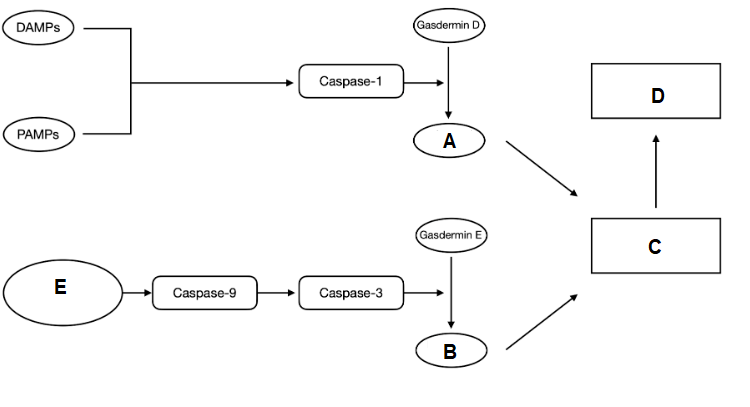
Indicate, as True or False, whether the following treatment will reduce the progress of CNS inflammatory diseases.
Question reproduced from IBO 2023, Theoretical Paper 2, licensed under CC BY-NC-SA 4.0 - attributed to the International Biology Olympiad. Open the full exam PDF