Q14 - Latitudinal Diversity Gradient: Three Hypotheses
The latitudinal diversity gradient describes a common pattern in the species richness seen in most groups of organisms whereby there are fewer species in the temperate regions than in the tropics. Species richness is lowest at the poles and highest on the equator. The ubiquity of this pattern suggests the possibility of a single general explanation but our understanding of this pattern is incomplete. The current latitudinal zones arose approximately 45 million years ago, after a period in which the Earth was primarily tropical. The following three hypotheses (Figure 1A-C) could possibly explain this gradient:
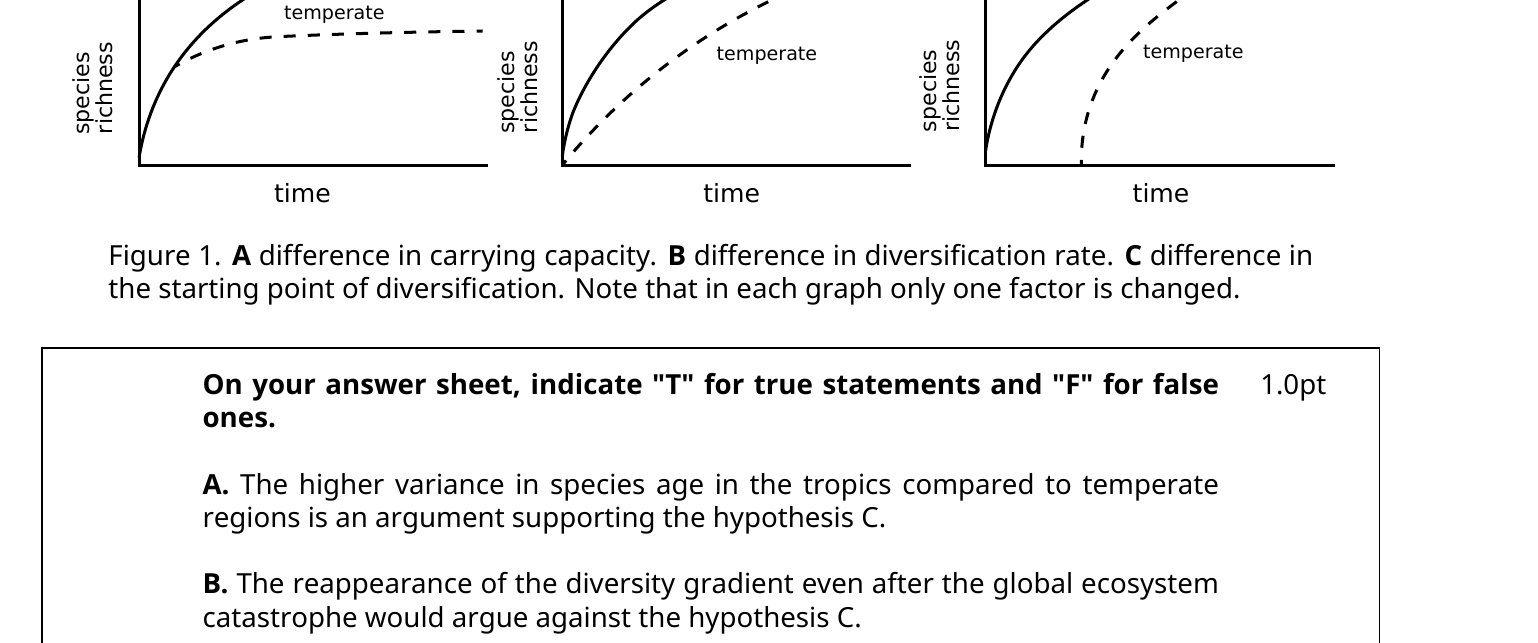 Figure 1. A difference in carrying capacity. B difference in diversification rate. C difference in the starting point of diversification. Note that in each graph only one factor is changed.
On your answer sheet, indicate “T” for true statements and “F” for false ones.
Question reproduced from IBO 2024, Theoretical Exam Part A, licensed under CC BY-NC-SA 4.0 - attributed to the International Biology Olympiad. Open the full exam PDF · Community solutions (unofficial)