Q13 - Shelterin, the T-loop, and Chromosome Bridge Formation
Telomeres are critical structures at the end of eukaryotic chromosomes, preventing the loss of genetic information during cellular divisions. Since telomeres resemble DNA breakpoints, they need to be protected from cellular DNA break repair mechanisms to prevent the ligation of the telomeric ends of different chromosomes. For that, a protein complex, shelterin, generates a structure shown in Figure 1B.
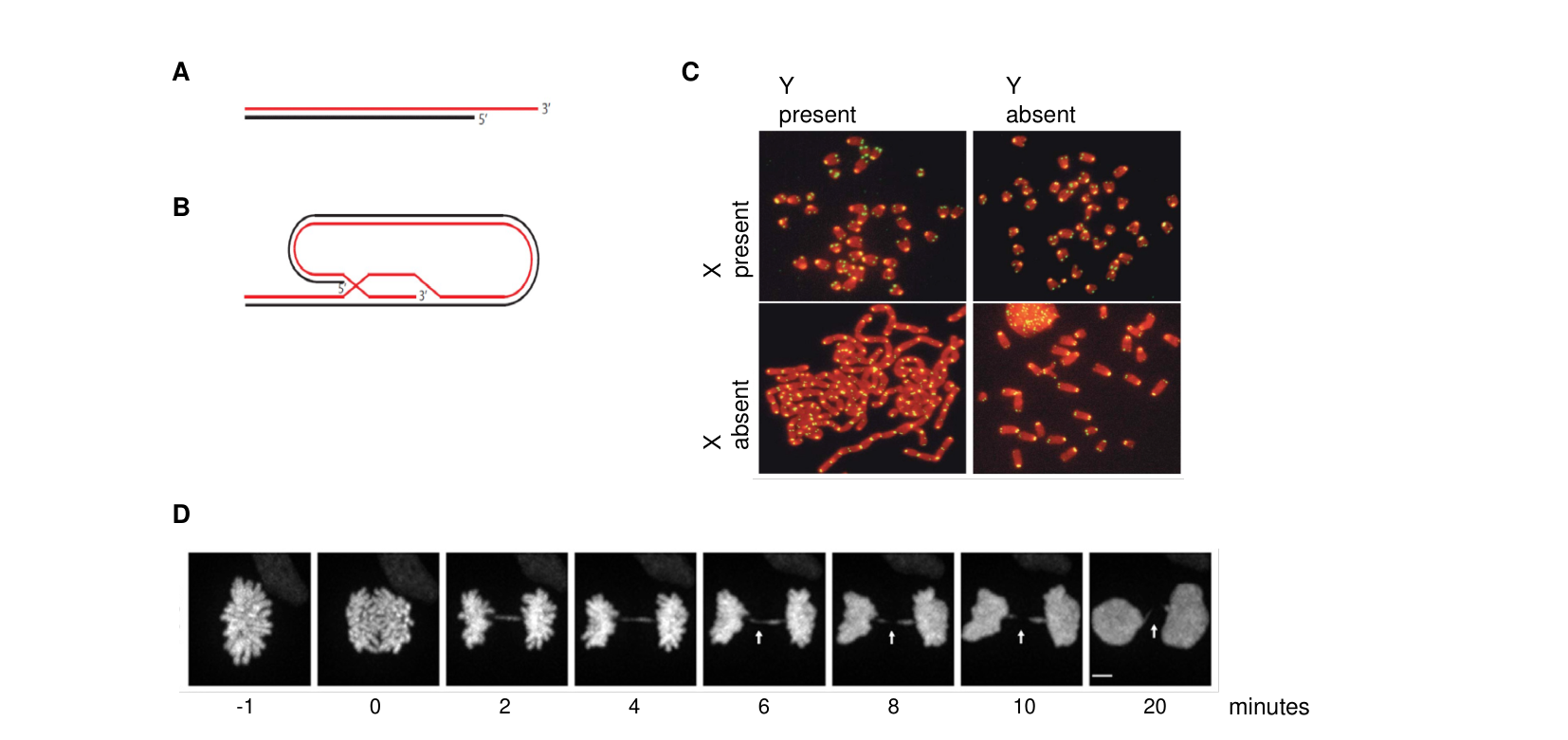 Figure 1. A, B Refer to the question text - the telomere’s single-stranded 3’ overhang (A) is tucked into a protective T-loop structure (B). C Microscopic images showing how factors X and Y affect the structure of chromosomes (one of the factors is a subunit of the shelterin complex). Telomeres are labeled with the green probe. D Microscopic images showing how unprotected telomeres result in chromosomal bridges during mitosis (white arrows point to the chromosome breakage, which starts at 6 min).
On your answer sheet, indicate “T” for true statements and “F” for false ones.
Question reproduced from IBO 2024, Theoretical Exam Part B, licensed under CC BY-NC-SA 4.0 - attributed to the International Biology Olympiad. Open the full exam PDF