Q9 - Compound X, Polyploidy, and Checkpoint Kinases A/B
Researchers studied the effect of compound X on the cell cycle progression of diploid human cells and how checkpoint kinases A and B regulate cellular response to this compound.
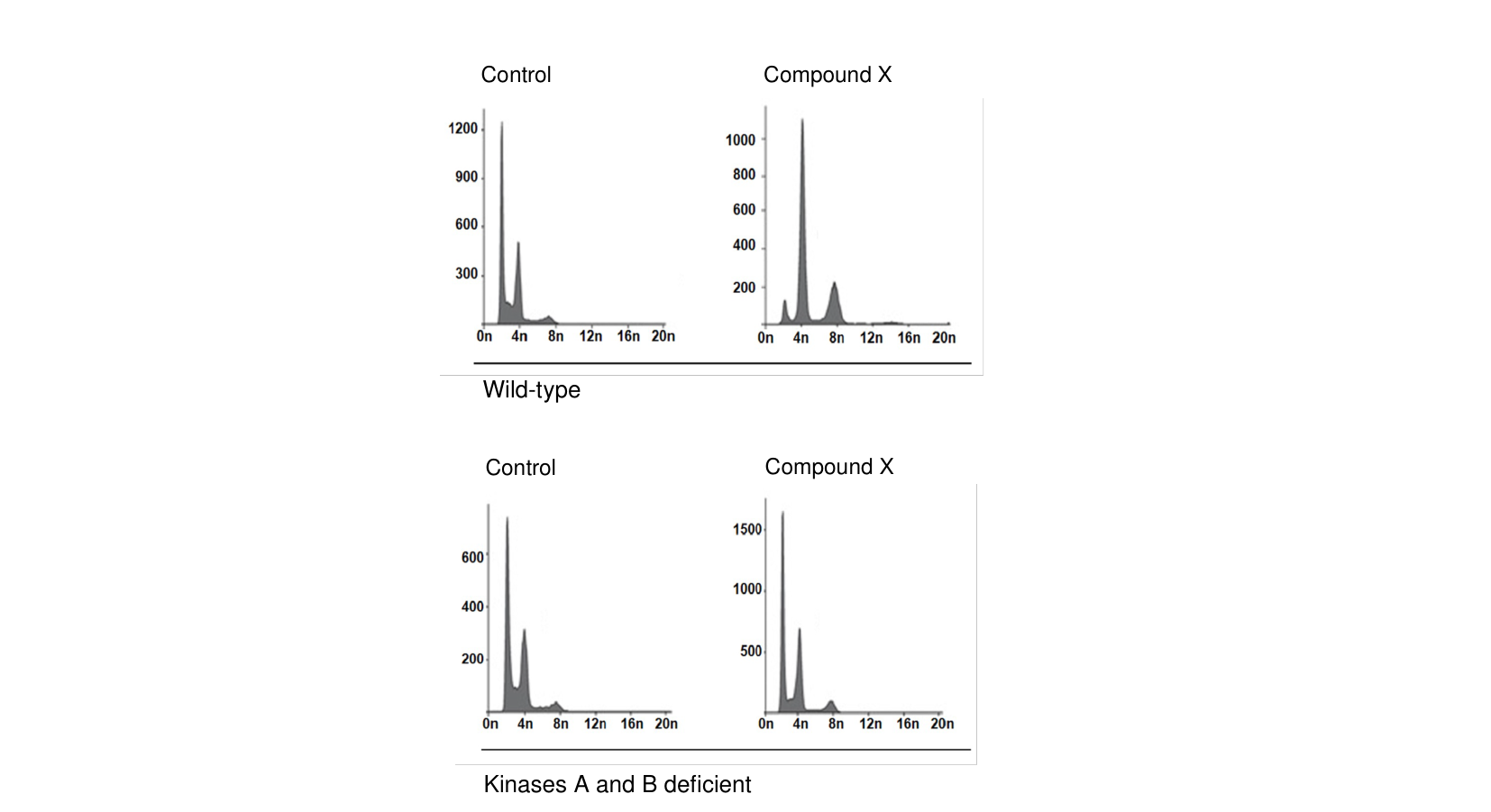 Figure 1. Results showing how the DNA amount in a dividing cell is affected under indicated conditions (Horizontal X-axis: DNA amount, where 2n represents the DNA content in a non-dividing diploid normal cell. Vertical Y-axis: Cell number).
On your answer sheet, indicate “T” for true statements and “F” for false ones.
A. Based on the results, under normal conditions (wild-type, control), cells are mainly in the G2 phase of the cell cycle.
B. Compound X induces polyploidy.
C. The effect caused by compound X is independent of protein kinases A and B.
D. Upon treatment with Compound X, protein kinases A and B prevent several rounds of DNA replication within one cell division.
Question reproduced from IBO 2024, Theoretical Exam Part B, licensed under CC BY-NC-SA 4.0 - attributed to the International Biology Olympiad. Open the full exam PDF