Q10 - Heterodimer Formation, Ligand Signaling, and Stem Cell Differentiation
Proteins A and B form a heterodimer and only then do they induce stem cell differentiation. Protein A is regulated at the transcriptional level by transcription factor X, which is in turn regulated by the ligand L. On the other hand, protein B is regulated post-translationally through phosphorylation and dephosphorylation at serine-121 residue.
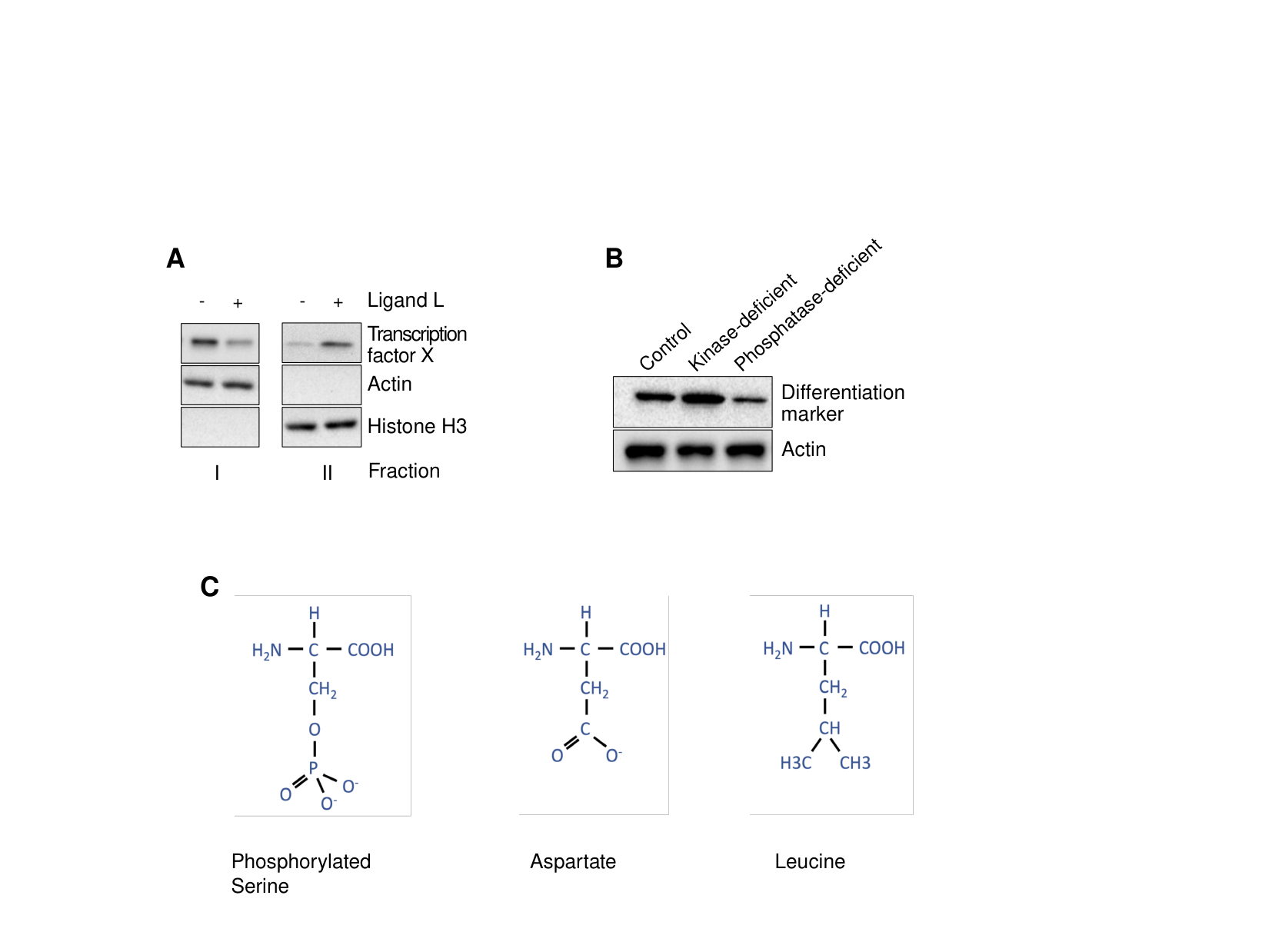 Figure 1. A Researchers isolated DNA-bound and unbound proteins (fractions) and analyzed the abundance of transcription factor X by Western Blot analysis but forgot to label the fractions. B Researchers studied how the deficiency of kinase and phosphatase affects the differentiation of cells by performing a Western Blot analysis. The higher the differentiation marker the higher the chance of differentiation. C The structures of phosphorylated serine and two other amino acids. Note that one amino acid can mimic phosphorylated serine.
On your answer sheet, indicate “T” for true statements and “F” for false ones.
Question reproduced from IBO 2024, Theoretical Exam Part B, licensed under CC BY-NC-SA 4.0 - attributed to the International Biology Olympiad. Open the full exam PDF