From Screen to Body: Drug Delivery BiOHorizon Report

BiOHorizon Report · Drug Delivery · October 2026
Designing a molecule on a computer is getting fast. Getting it to work inside a living body is where most of the loss still happens. Over the last two years, a generative-AI drug reached patients, designed proteins neutralised snake toxins in mice, a gene editor was built for a single baby in six months, a receptor shuttle carried a drug across the blood-brain barrier into regulatory approval, and researchers measured how little RNA actually escapes inside a cell. This report separates what was measured from what was claimed and shows where each story plugs into the biology you are studying.
How to read a delivery claim
A drug has to survive a long obstacle course, and almost every headline of the form “new therapy works!” survives or collapses on the same four questions. Keep them in your head through every story below.
What was actually measured?
Reaching a tissue, working inside a cell, moving a blood marker and helping a patient feel or live better are four different results. Headlines blur them.
In what, and how many?
Cells in a dish, mice, monkeys or people? Five mice or seventy-one patients? Mouse data is not a human result.
Compared with what?
A placebo , the previous best design, or nothing at all? A change with no comparison group can have many causes.
Who else has seen it, and who paid?
Has a different team reproduced it? Is the sponsor the company that makes the drug? A company press release is a claim, not evidence.
Four hurdles: get there, get in, get out, do the job
Whatever the cargo, a drug that works inside a cell must pass four hurdles, in this order:
- Reach the right tissue from the blood.
- Enter the right cells.
- Get out of the membrane-bound compartment it was swallowed into.
- Do its job once free.
Each step keeps only a fraction of what entered it, and the fractions multiply. Three stages that each keep 10% leave 0.1% (0.1 × 0.1 × 0.1 = 0.001). That multiplication is why a molecule that binds its target beautifully in a test tube can still fail in a body, and it is the idea behind the lab in story 5.
Delivery is also not the same as efficacy. A drug can arrive and do nothing useful, or do something useful for a reason unrelated to where you aimed it. Each story below says which of those it has shown.
The five stories at a glance
| Story | Where | Headline | Honest status |
|---|---|---|---|
| 1. A designed drug in patients | Lungs, by mouth | A small molecule whose target and structure came from generative AI, tested against placebo in 71 patients | Phase IIa result, small and short; a larger Phase III has been announced by the company |
| 2. Designed against venom | Mouse blood | Proteins built from scratch to grab snake neurotoxins and protect mice | Mouse data; a binder against the cytotoxin class did not protect |
| 3. One baby, one editor | Liver | A base editor in lipid nanoparticles made for a single infant with a urea-cycle disease | One patient, seven weeks of follow-up reported, editing in his liver not directly measured |
| 4. Across the barrier | Brain | A transferrin-receptor shuttle carrying an enzyme into the brain, approved in the US | Accelerated approval on a biomarker; clinical benefit still being tested |
| 5. The 2% problem | Inside the cell | Only a small share of delivered RNA escapes the endosome , and new methods are measuring it better | Several methods agree it is low and disagree on the number |
An AI-designed drug meets real patients
The claim
In June 2025, Nature Medicine reported a randomised, placebo-controlled Phase IIa trial of a drug whose biological target and chemical structure were both found with generative AI . The drug, rentosertib , inhibits an enzyme called TNIK and was tested in idiopathic pulmonary fibrosis (IPF), a disease in which lung tissue scars and breathing capacity falls. The authors report that it was safe enough in 12 weeks and that the highest dose group showed a gain in lung function while placebo patients lost some.1
How they did it
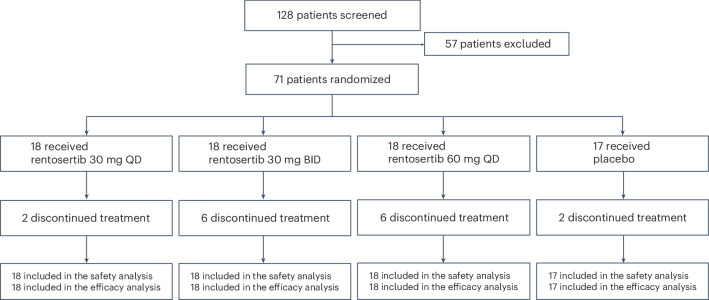
The company Insilico Medicine used one AI platform (PandaOmics) to nominate TNIK as a target and another (Chemistry42) to propose the molecule. Those are the “in silico” steps, meaning done on a computer. Then came the part no computer can do: patients. The trial enrolled 71 people with IPF at multiple sites in China between July 2023 and June 2024 and gave them a placebo or rentosertib by mouth for 12 weeks. The main goal was safety; lung function was a secondary measure, tracked as forced vital capacity (FVC), the volume of air you can blow out after a full breath.1
The numbers
- Groups: placebo (17 patients), 30 mg once daily (18), 30 mg twice daily (18), 60 mg once daily (18).
- FVC change at 12 weeks:
- placebo -20.3 mL (95% confidence interval -116.1 to 75.6)
- 30 mg once daily -27.0 mL
- 30 mg twice daily +19.7 mL
- 60 mg once daily +98.4 mL (95% confidence interval 10.9 to 185.9)
- Adverse events (primary endpoint ): at least one treatment-emergent event in 70.6% of placebo patients and 72.2% to 83.3% of drug groups.
- Dropouts: 16 of 71 patients stopped treatment early. Seven stopped for liver dysfunction, four of whom were also taking another IPF drug, nintedanib .1
Where it is contested
Read the confidence intervals, not just the averages:
- Only the 60 mg group’s interval excludes zero.
- Each group has about 18 people.
- 12 weeks is short for a scarring disease.
- The response was not smoothly dose-ordered (the twice-daily 30 mg group did less than the once-daily 60 mg group).
The authors themselves list small groups, a single country and short follow-up as limits. Several authors are Insilico employees and the company sponsored the trial.1 The real test is a larger trial: in July 2026 the company announced a 52-week Phase III in 320 patients at 47 centres in China, with the yearly rate of FVC decline as the main endpoint. That is a press release and the drug has no regulatory approval.2
The biology underneath
This is the “easy” delivery case: a small molecule you swallow, which is why the story is mostly about whether the target was the right one. TNIK is a kinase, an enzyme that transfers a phosphate group from ATP onto other proteins, and many kinase drugs work by blocking that step. FVC and lung scarring connect to respiratory physiology.
Think like a researcher: what would make you believe the lung gain is real?
The 60 mg group gained 98.4 mL and placebo lost 20.3 mL, but both averages come from small groups, and some patients also took another drug. List two things that could produce a gap like this without rentosertib doing anything. Then say which single result in the Phase III would convince you.
Proteins built from scratch against snake venom
The claim
In January 2025, Nature published work led by the Baker lab (University of Washington) and the Technical University of Denmark in which researchers used deep learning to design small proteins that bind three families of snake venom toxins called three-finger toxins . The designed proteins neutralised toxins in the lab and protected mice from a lethal neurotoxin dose.3

.jpg)
How they did it
Instead of immunising an animal and harvesting antibodies, as traditional antivenom does, the team asked software to invent a protein that would fit the toxin’s surface. Three tools did the work in turn:
- A diffusion model (RFdiffusion ) generated backbones.
- ProteinMPNN chose amino-acid sequences for them.
- AlphaFold2 was used to filter out designs predicted not to fold or bind.
Only the top candidates were then made and tested in the lab. I read the open preprint version of this work, so numbers below come from it and the published paper may differ in detail.3
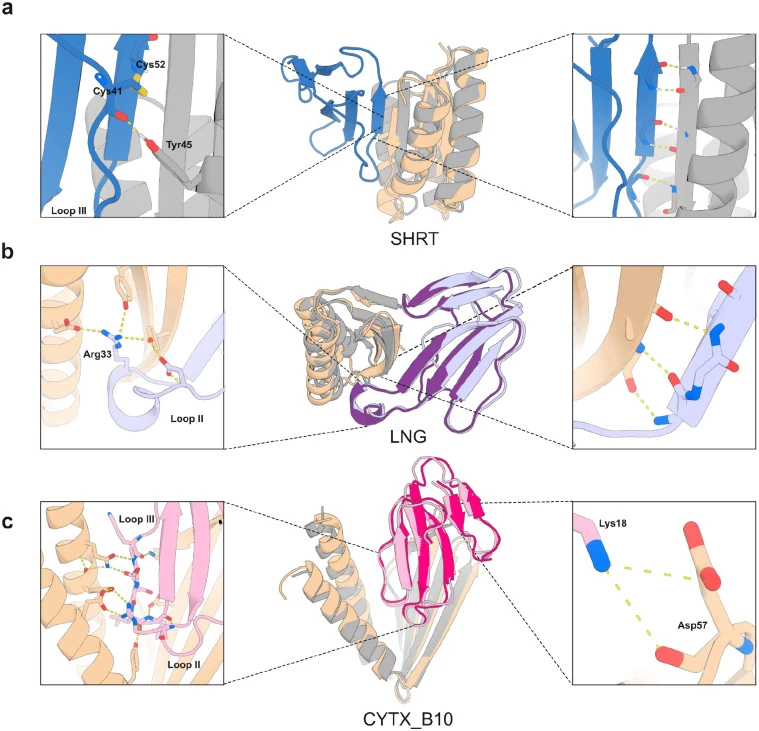
Try it: rotate a designed binder gripping its toxin
This is the real crystal structure behind row (b) of Fig. 3: the designed LNG binder holding alpha-cobratoxin. Drag to rotate and scroll to zoom. Switch on the contact residues to see which amino acids touch across the interface, or the toxin surface to see how snugly the binder sits on it.
Loading the 3D structure (needs JavaScript and WebGL)...
LNG binder (the designed protein)Alpha-cobratoxin (the toxin)
Interactive. PDB entry 9BK5, solved by X-ray crystallography at 2.68 Å resolution, from Vázquez Torres et al., Nature 639, 225 to 231 (2025). Structure data from the RCSB Protein Data Bank (open data). Contact residues are those within 4.5 Å of the other protein.3
The numbers
- Binding: the best designs held their toxins with dissociation constants (Kd) of about 0.9 nM (short-chain neurotoxin), 1.9 nM (long-chain alpha-cobratoxin) and 271 nM (cytotoxin , the weakest). Lower Kd means tighter binding.
- Stability: melting temperatures of 78 °C, above 95 °C and 61 °C, high for proteins.
- Structure check: crystal structures of three designs matched the computer models closely, with root-mean-square deviations between about 0.4 and 1.3 Å.
- Mice: groups of 5 got three times the lethal dose of toxin. When toxin and binder were mixed first, both neurotoxin binders gave 100% survival. When the binder was given 15 minutes after the toxin, survival was 100% for both, and at 30 minutes it was 100% for the short-chain binder and 60% for the long-chain one.3
Where it is contested
Two limits are in the paper itself. The cytotoxin binder, the weakest at 271 nM, did not significantly shrink the tissue-damaging lesions in preliminary mouse tests, and the authors say its affinity probably needs improving. And protection fell off as the delay grew, which is the realistic situation for a bite. Beyond that, the work covers three toxin families, while real venoms are mixtures that also contain other classes of toxins, so a bite would need several binders. The mouse results use small groups and, in the pre-mixed case, never test the harder question of reaching a toxin already spreading through the body.3
The biology underneath
A binder is a protein whose shape is complementary to its target, the same lock-and-key logic as an antibody and its antigen, and Kd is the concentration at which half of the target is occupied. This story is protein structure-function in its purest form: sequence determines fold, fold determines surface, surface determines binding.
Think like a researcher: why does the order of mixing matter?
Mixing binder and toxin in a tube before injection tests whether they bind. Giving the binder 15 or 30 minutes after the toxin tests whether the binder can find toxin that is already in the body. Which result would you trust more as a model of a snakebite, and what extra measurement (for example, how fast the binder leaves the blood) would you want before believing a human dose could work?
A gene editor made for one baby
The claim
In May 2025 (print issue June 2025), the New England Journal of Medicine reported that a team including clinicians at the Children’s Hospital of Philadelphia had designed, tested and delivered a customised base-editing therapy to a single infant with severe carbamoyl-phosphate synthetase 1 (CPS1) deficiency . After the second dose, the authors report that he tolerated more dietary protein and needed half the starting dose of a nitrogen-scavenger drug, with no serious adverse events. They also stress that longer follow-up is needed.4
How they did it
CPS1 is the first enzyme of the urea cycle , the liver pathway that converts toxic ammonia into urea. The baby’s blood ammonia was above 1000 micromoles per litre in his first days (the reference range is 9 to 33), and he carried two different stop-codon variants, one on each copy of the gene. The team built a therapy around the paternal variant, Q335X. A base editor is a protein that rewrites a single DNA letter without cutting both strands; here an adenine base editor and a guide RNA were packaged as mRNA and RNA in lipid nanoparticles that, given intravenously, are taken up by liver cells. Candidate editors went through three tests in turn:
- They were screened in a lab-made cell line carrying the variant.
- They were tested in mice engineered with the human sequence.
- They were checked for safety in monkeys.
The whole process from diagnosis to first dose took about six months.4
The numbers
- Mice: up to 42% whole-liver corrective editing in a small number of mice, with editing visible at the lowest dose, 0.1 mg per kg.
- Monkeys: a safety study at 1.5 mg per kg of total RNA showed transient rises in liver enzymes and no clinical signs of toxicity.
- The baby: a first dose of 0.1 mg per kg of total RNA on day 208 of life (his weight was 7.14 kg the day before, so about 0.7 mg of RNA), and 0.3 mg per kg 22 days later. His nitrogen-scavenger dose was cut from 10.1 to 5.0 mL per square metre of body surface per day. Median blood ammonia was 23 micromoles per litre before the first dose, 9 between doses and 13 after the second.4
The detail that matters most: nobody measured the editing in him
A liver biopsy to check for corrective editing was skipped because it posed an unacceptable risk to the infant, so the 42% figure comes from mice, not from him. The evidence of benefit is indirect: less ammonia, more tolerated protein, better weight gain, in a baby also receiving immune-suppressing drugs and surviving viral illnesses. That is a real and encouraging signal, but it is not the same as showing how much of his liver was edited.4
Where it is contested
This is one patient, so there is no comparison group and the improvements sit alongside other changes (diet, medication, growth, recovery from infections). The reported follow-up is seven weeks after the first dose, and the authors say longer follow-up is needed for safety, efficacy and neurological health. The work was funded by the US National Institutes of Health and others, with in-kind contributions from Acuitas Therapeutics (which makes lipid nanoparticles) and other companies. The authors argue that similar customised therapies could be built for hundreds of liver metabolic diseases, but that is their expectation, not something this single case shows.4
The biology underneath
The baby is a compound heterozygote: two different disease variants, one inherited from each parent, so the therapy as described targets only one of them. That is a classic pedigree and human genetic disorders idea. The urea cycle sits within digestive and metabolic physiology, and the delivery vehicle is built from lipids and membrane biochemistry. Base editing itself is a use of recombinant DNA and biotechnology techniques.
Think like a researcher: how would you prove it worked?
You cannot biopsy the baby's liver. List three indirect measurements that would together make the case that the editor worked in his liver (think about the pathway: which molecules rise or fall if CPS1 activity comes back?). Then name one result that would make you suspect the improvement had another cause.
A shuttle across the blood-brain barrier
The claim
In March 2026 the US Food and Drug Administration granted accelerated approval to tividenofusp alfa (brand name Avlayah), for the neurologic effects of Hunter syndrome in children. The FDA describes the approval as based on a surrogate endpoint and says a confirmatory randomised trial is under way.5 It is the first approved drug built to cross the blood-brain barrier using the transferrin receptor , according to the company.
How they did it
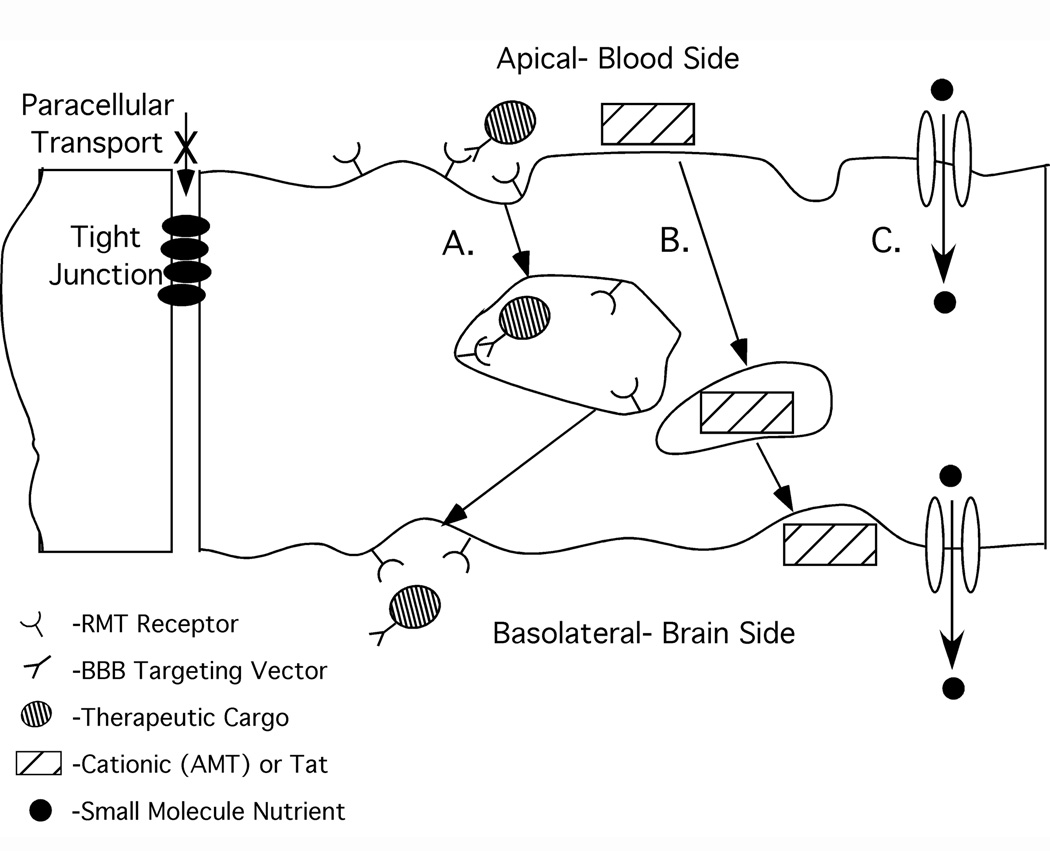
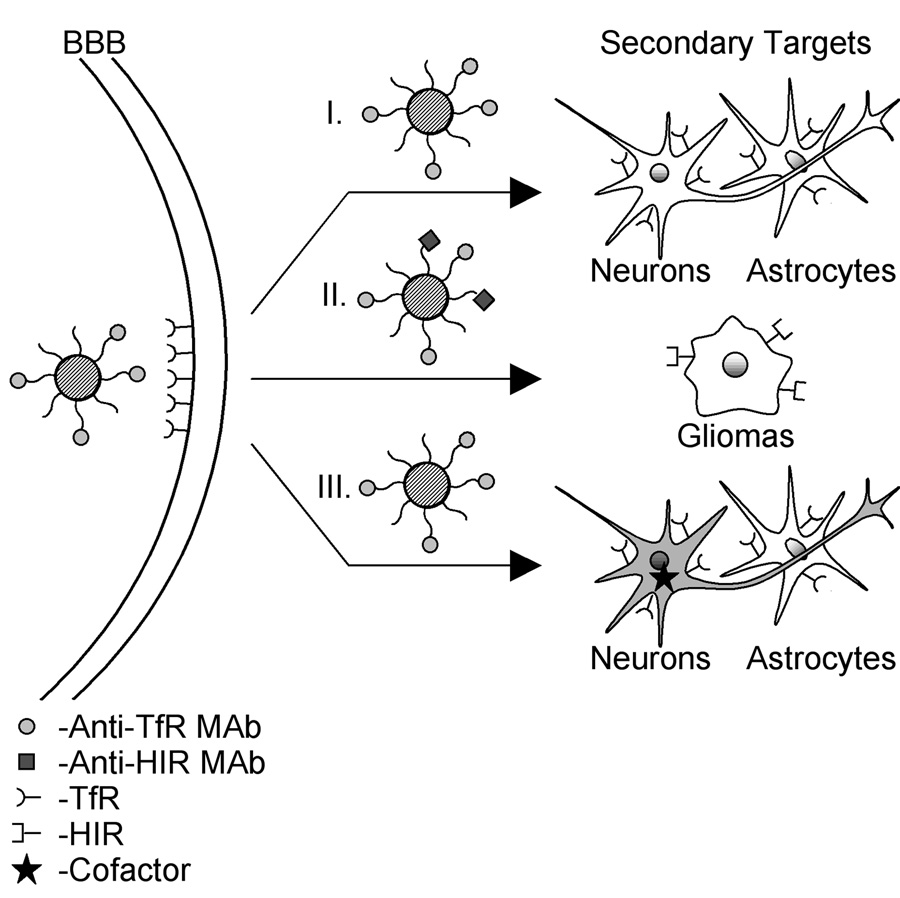
The blood-brain barrier is a layer of tightly joined cells lining brain capillaries that keeps most of the blood’s contents out. About 98% of small-molecule drugs do not cross it.6 The shuttle trick is to fuse the drug to a protein that binds the transferrin receptor, a surface protein these cells use to import iron, so the cell carries the drug through by receptor-mediated transcytosis: taken in on one side, ferried across, released on the other. Tividenofusp alfa fuses the missing enzyme (iduronate-2-sulfatase, IDS) to such a binder. Hunter syndrome is caused by too little IDS, which lets sugar polymers such as heparan sulfate build up in tissues including the brain.
The numbers
- Trial: 47 children aged 3 months to 13 years, with 44 measured at week 24.
- Result: cerebrospinal fluid heparan sulfate fell by about 91% on average, and 93% of treated patients ended below the upper limit of normal.
- Safety: a boxed warning for severe allergic reactions including anaphylaxis, with monitoring for anaemia and a kidney condition called membranous nephropathy.5
The same strategy is being tested in Alzheimer’s disease. Roche’s trontinemab is an anti-amyloid antibody with a transferrin-receptor-binding fragment attached. A summary by Alzforum of mid-2025 early-phase data reports deep amyloid clearance at 3.6 mg per kg and a low rate of brain swelling, with anaemia as the most notable safety signal. Two Phase 3 trials (TRONTIER 1 and 2, 800 patients each, started September 2025) test whether clearing amyloid actually helps cognition.7
The detail that matters most: a surrogate is not the outcome
Heparan sulfate in spinal fluid is a stand-in measurement. The FDA granted accelerated approval because it is judged reasonably likely to predict benefit, not because children were shown to think, speak or learn better. The drug getting in and clearing the sugar is a delivery result; whether it changes a child's development is an efficacy result that is still being tested.5
Where it is contested
Beyond the surrogate question, the study is small and the patients were not compared with a control group in the result quoted. Anaphylaxis and anaemia are not accidents: they are plausible consequences of aiming at a receptor that is also used by blood-forming cells and that circulates widely, so the shuttle has to be strong enough to cross the barrier without hijacking iron handling elsewhere. For trontinemab the key evidence so far is amyloid clearance, the same kind of stand-in, and the Phase 3 results are not expected before 2028.7
The biology underneath
Receptor-mediated transcytosis is plasma membrane transport and endomembrane trafficking applied to medicine: coated pits, vesicles, sorting and release. The barrier itself, with its tight junctions and special endothelium, belongs with the nervous system notes.
Think like a researcher: tight binding can backfire
A shuttle that grabs the transferrin receptor very tightly might get stuck inside the barrier cell and never be released on the brain side. A shuttle that binds weakly might never be taken up. Sketch how the amount of drug reaching the brain would change as binding goes from weak to very strong. What would you measure to find the best middle?
The 2% problem
The claim
Stories 3 and 4 both end with a drug that has to leave a bubble. When a cell swallows a lipid nanoparticle , the particle sits inside an endosome, a membrane-bound compartment that gets steadily more acidic and eventually fuses with lysosomes that digest its contents. RNA only works if it reaches the cytosol first. A 2013 Nature Biotechnology study using imaging found that escape of siRNA from endosomes into the cytosol is inefficient, at about 1 to 2%, and happens only in a narrow window.8 A 2025 paper still describes it that way in its introduction, calling current escape strategies “largely ineffective” with 1 to 2% of administered RNA reaching the cytoplasm.9
How they did it
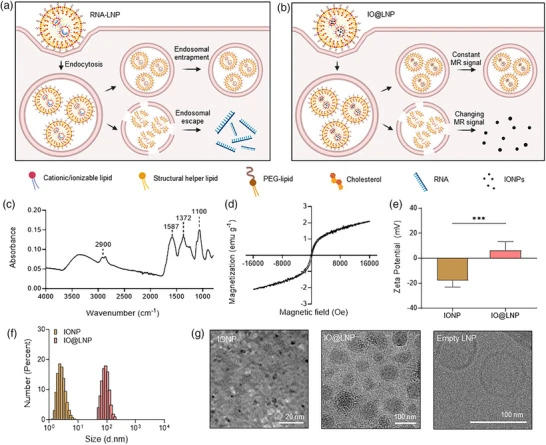
Measuring escape is hard because the RNA is invisible once it mixes into the cytosol. The 2013 study tracked fluorescently labelled siRNA in lipid nanoparticles by quantitative imaging and electron microscopy, in cells and in mouse liver.8 The 2025 study added iron oxide nanoparticles inside the lipid particles and followed their magnetic signal by MRI in cultured cells and mice, as an indirect read-out of escape.9 A March 2026 Nature Biotechnology paper reports an in vivo assay built on mice that allow liver lysosomes to be isolated, with a “lysosomal barcoding” method, and from it a new ionisable lipid , BiP-20.11 I read only the abstract-level summary of that paper.
The numbers
- About 1 to 2% of siRNA escaping in the 2013 imaging study.8
- About 8% of BiP-20 particles reaching the cytosol within 30 minutes in liver, according to the 2026 abstract-level summary, with eightfold better gene editing of the TTR gene at low dose than a clinical benchmark lipid (LP01). The same work reports that losing a protein called Rab7, which helps endosomes mature, increased escape.11
- A 2025 caution: the MRI study’s own escape index came out higher than the literature, and its authors attribute that to using bulky iron oxide particles as stand-ins rather than tracking RNA directly.9
- Upstream losses: an analysis of 117 published papers found a median of only 0.7% of an injected nanoparticle dose reaching a solid tumour.10
The maths under the hood
Step 1: the delivery budget multiplies. The share of the injected dose that ends up working in the cytosol of the target cells is the product of the fractions kept at each hurdle:
$$ f_{\text{cytosol}} = f_{\text{reach}} \times f_{\text{uptake}} \times f_{\text{escape}} $$
Take the tumour figure of 0.7% reaching the tissue,10 an illustrative 30% of that taken up by cells (this one is a made-up round number, not a measurement), and 2% escaping.8 Then 0.007 × 0.30 × 0.02 = 4.2 × 10⁻⁵, or 0.0042% of the dose. In other words, about 24,000 injected molecules for each one that reaches the cytosol.
Step 2: headroom. For any stage with fraction f, the most that stage can improve the outcome is a factor of 1 / f (at most 100% kept). The 2% escape stage has up to 50 times of headroom; a stage already at 30% has only 3.3 times. Raising escape from 2% to 8%, as in the newest result above, multiplies the end result by 4 (to 0.0168%) without touching anything upstream.
Step 3: the trap. These stages are not independent or fixed. Particle size and surface change both tissue reach and uptake, a dose that saturates the cell changes the fractions, and a small cytosolic number can still be plenty when the cargo is catalytic, such as an editing enzyme or an mRNA translated many times. Treat the budget as a way to ask where the loss is, not as a prediction.
Try it: the delivery budget
Move the three sliders to set how much of the dose survives each hurdle, or press a preset. The bars show the share of the injected dose still in play after each stage, on a log scale because the losses multiply. Start with the typical tumour case, then press the better-escape preset.
Toy model: three independent fractions multiplied together. Only the 0.7% tissue figure (a median across published tumour studies) and the 1 to 2% and 8% escape figures come from the sources; the uptake value is illustrative. Real stages interact and differ by tissue, particle and cell.
Where it is contested
The headline number is slippery. The 1 to 2% figure comes from siRNA in one system and has been repeated for over a decade; newer methods read out different things (fluorescence, magnetic signal, reporter genes, barcoded lysosomes) and do not give the same number, as the 2025 authors admit about their own index. The 2026 result also comes with its own assumptions, and I did not read the full paper. And a low percentage is not automatically a failure: some therapies work with very few molecules in the cytosol, which is why a 4 times better escape rate does not guarantee a 4 times better drug.911
The biology underneath
An endosome is the cell’s sorting station, and the whole story is endomembrane trafficking seen from the cargo’s point of view: vesicle uptake, acidification, maturation and fusion with the lysosome. The lipids that help RNA escape work by disturbing the endosomal membrane, which is why it also matters to know lipids and membrane biochemistry. Once free, an mRNA meets the machinery of translation.
Think like a researcher: where would you spend your effort?
Use the lab to compare two projects: one that triples the share reaching the tissue, and one that triples endosomal escape. Why do they give the same result in the budget? What real-world considerations (safety, cost, off-target tissues, headroom) would make you choose one over the other?
What happens next
Rentosertib Phase III : a 52-week trial in 320 patients at 47 centres in China, announced July 2026 by the sponsor.2
Tividenofusp alfa must show clinical benefit in its randomised confirmatory trial to keep its accelerated approval .5
TRONTIER 1 and 2, the Phase 3 trials of trontinemab for early Alzheimer's disease , have an estimated completion in 2028.7
PrevenTRON, a trontinemab prevention trial in 1,600 people without symptoms, began recruiting in September 2026 with an estimated completion in September 2032.7
Longer follow-up of the CPS1 patient and any further customised editors: the authors call for it but no schedule is stated.4
Where this meets your syllabus
| Story | Concepts you can practise with it | Study next |
|---|---|---|
| 1. Designed drug | Enzymes and kinases, signalling, reading a clinical trial, lung function | Enzyme Kinetics and Regulation Cell Signalling |
| 2. Venom binders | Protein structure and folding, binding affinity, antibodies and antigens | Protein Structure, Folding and Function Immune Physiology |
| 3. One baby | Compound heterozygotes, the urea cycle, lipid nanoparticles, DNA editing | Pedigree Analysis and Human Genetic Disorders Digestive and Metabolic Physiology |
| 4. Brain shuttle | Receptor-mediated transport, tight junctions, surrogate versus clinical endpoints | Plasma Membrane Structure and Transport Nervous System Physiology |
| 5. The 2% problem | Endocytosis, endosome maturation, membrane lipids, multiplying fractions | Endomembrane System and Protein Trafficking Lipids and Membrane Biochemistry |
Glossary
In silico
Surrogate endpoint
Accelerated approval
Phase I, II and III trials
Forced vital capacity (FVC)
Dissociation constant (Kd)
Base editor
Lipid nanoparticle (LNP)
Compound heterozygote
Receptor-mediated transcytosis
Endosome
Sources
- A generative AI-discovered TNIK inhibitor for idiopathic pulmonary fibrosis: a randomized phase 2a trial. Nature Medicine (2025). doi:10.1038/s41591-025-03743-2. Read via the open PMC copy: PMC12353801.
- Insilico Medicine. Insilico initiates Phase III clinical trial for rentosertib, its AI-empowered TNIK inhibitor for idiopathic pulmonary fibrosis. Press release, 7 July 2026 (company announcement, not independent evidence). PR Newswire
- Vázquez Torres S et al. De novo designed proteins neutralize lethal snake venom toxins. Nature (2025). doi:10.1038/s41586-024-08393-x. Numbers above were read from the preprint version, PMC11118692 (Research Square, doi:10.21203/rs.3.rs-4402792/v1), and may differ from the published paper.
- Musunuru K et al. Patient-specific in vivo gene editing to treat a rare genetic disease. N Engl J Med 392:2235-2243 (2025). doi:10.1056/NEJMoa2504747
- US Food and Drug Administration. FDA approves drug to treat neurologic manifestations of Hunter syndrome. Press announcement, March 2026. fda.gov
- Pardridge WM. Advanced blood-brain barrier drug delivery. Pharmaceutics 15:93 (2023). doi:10.3390/pharmaceutics15010093. Read via PMC9866552. Used only for the share of small molecules that cross the barrier.
- Alzforum. Trontinemab (therapeutics database entry), reading of AAIC 2025 data and trial status. Secondary coverage, not the primary papers. alzforum.org
- Gilleron J et al. Image-based analysis of lipid nanoparticle-mediated siRNA delivery, intracellular trafficking and endosomal escape. Nature Biotechnology 31:638-646 (2013). nature.com/articles/nbt.2612. Abstract-level reading only.
- Lee S et al. Magnetic resonance imaging-based quantification of endosomal escape using iron oxide nanoparticle-loaded lipid nanoparticles. Advanced Healthcare Materials 14(30):e03055 (2025). doi:10.1002/adhm.202503055. Open copy: PMC12645086.
- Wilhelm S, Chan WCW et al. Analysis of nanoparticle delivery to tumours. Nature Reviews Materials 1:16014 (2016). nature.com/articles/natrevmats201614. Abstract-level reading only.
- In vivo endosomal escape assay identifies mechanisms for efficient hepatic LNP delivery. Nature Biotechnology (March 2026). doi:10.1038/s41587-026-03022-6. Abstract-level summary only; the full paper was behind a sign-in page and was not read.